When Team Topologies first came out six years ago, it quickly became an essential guide for anyone serious about improving how teams work. Now, with the release of the second edition, the core message is even more powerful: clarity of purpose is the single most important factor for achieving agility and speed. This principle has been a central tenet of my professional life for decades. When teams and stakeholders understand their purpose and have the right tools and processes, they can align, make confident decisions, and move at pace. This is how organisations learn, innovate, pivot, and ultimately deliver value.
#The Evolution of an Idea: From Efficient Machines to Flourishing Ecosystems
The original essence of Team Topologies remains: an organisation must become a sensing entity that continuously tunes into what's working and what's not. It's not a static blueprint, it's a living model grounded in continuous learning and adaptation. This is more critical than ever as we all gallop into the AI era. Getting these foundational principles right now will enable organisations to adopt emerging technologies with grace and confidence. As professionals, we can experiment, learn quickly, and discard what doesn't serve us, all without simply slapping AI onto every process and getting rid of the people who do the complex thinking required for success.
A key theme in the second edition is the shift from viewing organisations as "efficient machines" to "flourishing ecosystems." This change elevates cognitive load from a simple consideration to a foundational design principle. As a practitioner, this is one of my favourite aspects of the book. It's a testament to the fact that people and human interaction are what truly make a business tick.
This new emphasis on cognitive load is a crucial acknowledgment that successful whole-organisation transformation must be humane. The second edition makes a strong case that a company's full potential is unlocked only when its organisational design is cohesive and enables the uninterrupted flow of value. After all, technology and tech teams only exist to deliver value to the business and its customers. It's only logical to consider the entire organisation in that flow, not just the technology delivery teams.
#Patterns of Practice: From Theory to Real-World Application
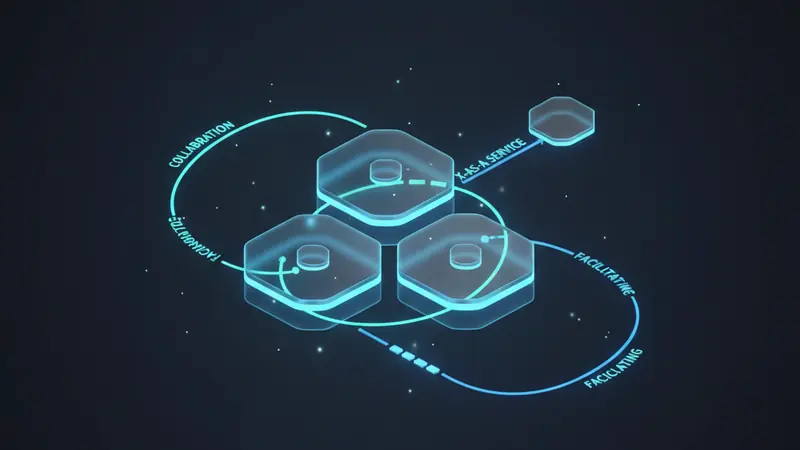
As Advanced Partners of Team Topologies, we at Armakuni have been applying these ideas in a wide range of industries for years. Our industry-agnostic approach helps us spot common patterns in product, tech, and business teams. The second edition reflects this real-world feedback, moving beyond the traditional static models to provide more adaptable, continuously evolving case studies. It provides examples of Team Topologies patterns being applied across portfolios, with core capabilities offered as a service. Leadership as a Service and Governance as a Service are examples that flip the traditional models of control to that of enablement and scalability.
One of the most valuable refinements in this edition is the move from the term "platform team" to "platform grouping." This change came from the community's road-testing of the ideas and better aligns with the reality that most platforms require more than a single team. A platform grouping is a collection of teams that together provide a coherent capability to other teams. This simple but powerful adjustment clarifies that a platform's success comes from a groups' collective ownership and stream alignment, which allows value to flow cleanly from idea to customer benefit.
This concept of "groupings" extends to the idea of fractal organisation, where similar patterns exist at multiple different 'zoom levels.' A platform grouping can contain its own Stream-aligned, Enabling, and Complicated Subsystem teams, showing how the principles scale within a larger structure.
#The Human Element: Managing Cognitive Load for Better Outcomes
At Armakuni we have consistently seen that teams thrive when they have clarity of ownership and can operate within well-defined boundaries. When a team's cognitive load is managed well, they can focus on their specific domain, nurture deeper expertise, and produce innovative solutions. Conversely, overwhelmed teams suffer from a decline in quality, stalled innovation, and increased risk.
The goal isn't always to lower the load but to manage it dynamically. This requires the organisation to be a sensing entity with people who can self-regulate and communicate their needs, managers who are tuned into their teams, and an overall culture that supports dynamic knowledge diffusion. The second edition of Team Topologies introduces a scientific model for systematically assessing cognitive load, developed in collaboration with organisational psychologists. This data-informed approach helps organisations confidently make improvements and evaluate where support is needed. It's about building a humane workplace where people are empowered to make decisions and take action, fostering a thriving internal ecosystem of aligned providers.
#Looking to the Future: The AI Revolution and Human-Centred Design
AI is here, and it's going to profoundly disrupt knowledge work. The second edition of Team Topologies offers vital guidance on designing AI-augmented organisations. It's not about replacing humans with automated systems but rather augmenting human capabilities. We must remind ourselves that vision and intent originate with people, not AI.
The book outlines how to build trust with autonomous AI agents through clear domain boundaries, explainable decisions, and high-fidelity operational telemetry. It also reinforces the crucial principle of avoiding handoffs, a lesson the community has learned from DevOps, for AI agent groupings (collections of autonomous agents working towards a common goal).
However, one thing remains non-negotiable: accountability is non-transferable.
As AI becomes more advanced, human teams will become even more important. It will continue to be the humans' job to define the mission and success criteria for AI agent fleets and oversee their operations. The optimal team size of around eight people, which fosters high trust and broad capability, remains a powerful model as the AI revolution evolves. Good input drives good output, and that input starts with clear, human-defined purpose.
#Our Final Takeaway: The Enduring Power of Team Topologies
Having worked with Team Topologies for almost a decade, Armakuni has seen the good, the bad, and the ugly. The underlying principles, from focusing on the flow of value to respecting cognitive load, stand true. The second edition reinforces this message, providing an even clearer guide to building adaptable, humane organisations. It's an overarching message of continuous evolution, active knowledge diffusion, and a principled approach to change that supports both the delivery of business results and improved human well-being. Team Topologies is not a short-term, bounded change programme; it's an ever-evolving practice that will continue to serve us all well in the years to come. We'd love to help you on your journey, drop us a message at hello@armakuni.com.